大慈大悲 孔雀明王
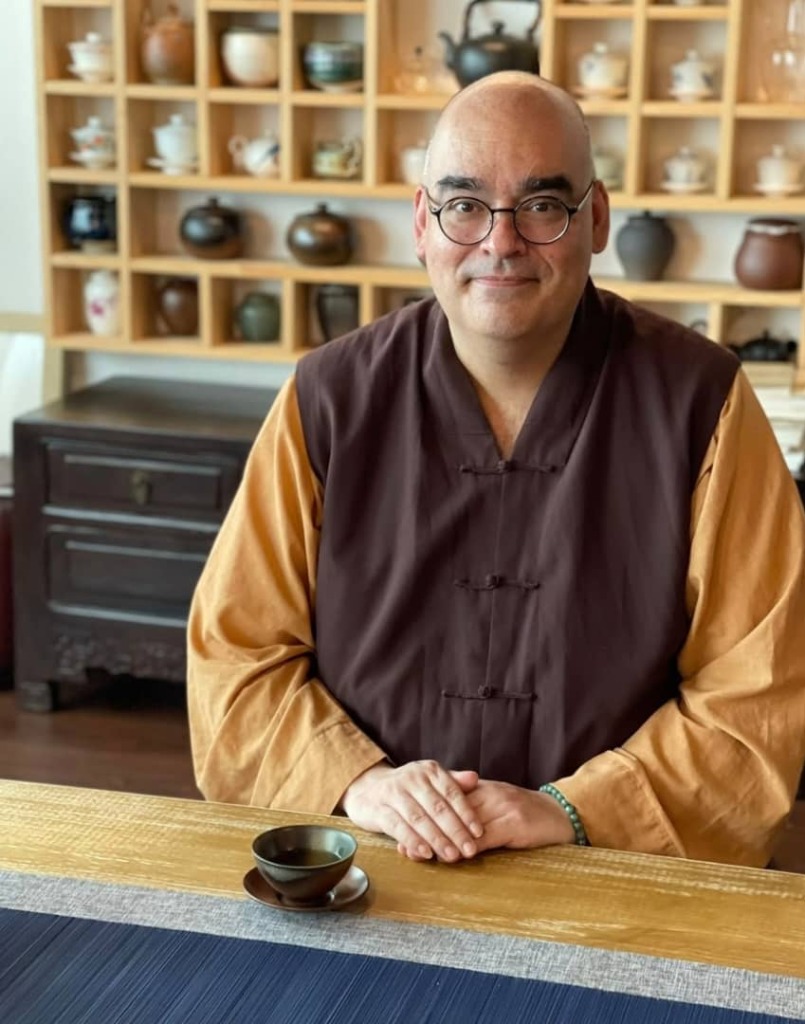
Venerable Hui Hsuen
FOUNDER & DHARMA TEACHER

Venerable Hui Hsuen

慧宣法師

A dedicated Dharma Master specializing in Mahayana scriptures and Shingon practices, with a strong focus on propagating the healing Mahamayuri (Peacock King) practices.

法師精研大乘經典與真言宗密法,近年致力弘揚**孔雀明王法門**,以慈悲與智慧將佛法融入現代生活。

Core Expertise & Teachings

專長與弘法重點

Mahamayuri Practice

孔雀明王法門

Specialized in Shingon & Mahayana practices; using compassion to transform misfortune into wisdom.

以大慈悲為本,熄滅三毒,將煩惱轉為智慧。

Meditative Arts

禪修與傳統藝術

Instructor of Meditative Tea Ceremony, Incense Ceremony, and Ogasawara-ryū Etiquette.

指導靜心茶道、香道,將禪修融入禮儀與藝術。

Ekayana Spirit

佛教一乘精神

Active engagement and dialogue with Theravāda, Mahāyāna, and Vajrayāna traditions.

與南傳、北傳、藏傳僧人共融,推動佛教一體合和。
Life Journey & Propagation

弘法歷程與足跡
Academic Background

US Birth & University Professor

美國出生與大學教學經歷
Born in Los Angeles, California, USA. Served as a Professor at Zhangzhou College of Science and Technology, and as Visiting Professor at several US universities (UC Irvine, Cal Poly Pomona).

出生於美國加州洛杉磯,曾任漳州科技學院教授,並於加州大學爾灣分校等多所美國大學擔任客座教授。
Dharma Focus

Shingon & Mahayana Specialization

真言密法與大乘經典弘傳
Specialized in Shingon Buddhism, Mahayana scriptures (e.g., Lotus Sutra), and the Mudrā practices of the Great Compassion Dharani. Conducts integrated Buddhist practices.

精研真言宗密法與大乘經典(如《法華經》),並教授大悲咒手印等顯密結合之修法。
Recent Focus

Propagating Mahamayuri in Asia

近年旅居亞洲弘揚孔雀明王法
Residing in Taiwan and Southeast Asia in recent years, dedicated to propagating the powerful Mahamayuri (Peacock King) practices for disaster aversion and healing.

近年旅居台灣與東南亞地區,致力於弘揚具備息災、增益功德的孔雀明王法門。
Service & Unity

Medical Relief & Interfaith Engagement

義診服務與跨宗派交流
Served as a Medical Relief Volunteer in Sri Lanka. Actively promotes the spirit of Ekayana (One Vehicle) through dialogue with Theravāda, Mahāyāna, and Vajrayāna monastics.

曾隨醫療團隊赴斯里蘭卡參與義診。並與南、北、藏傳僧人長期交流,推動佛教一乘精神。

Our Deities

所奉諸尊
Mahāvairocana

Mahāvairocana

大日如來
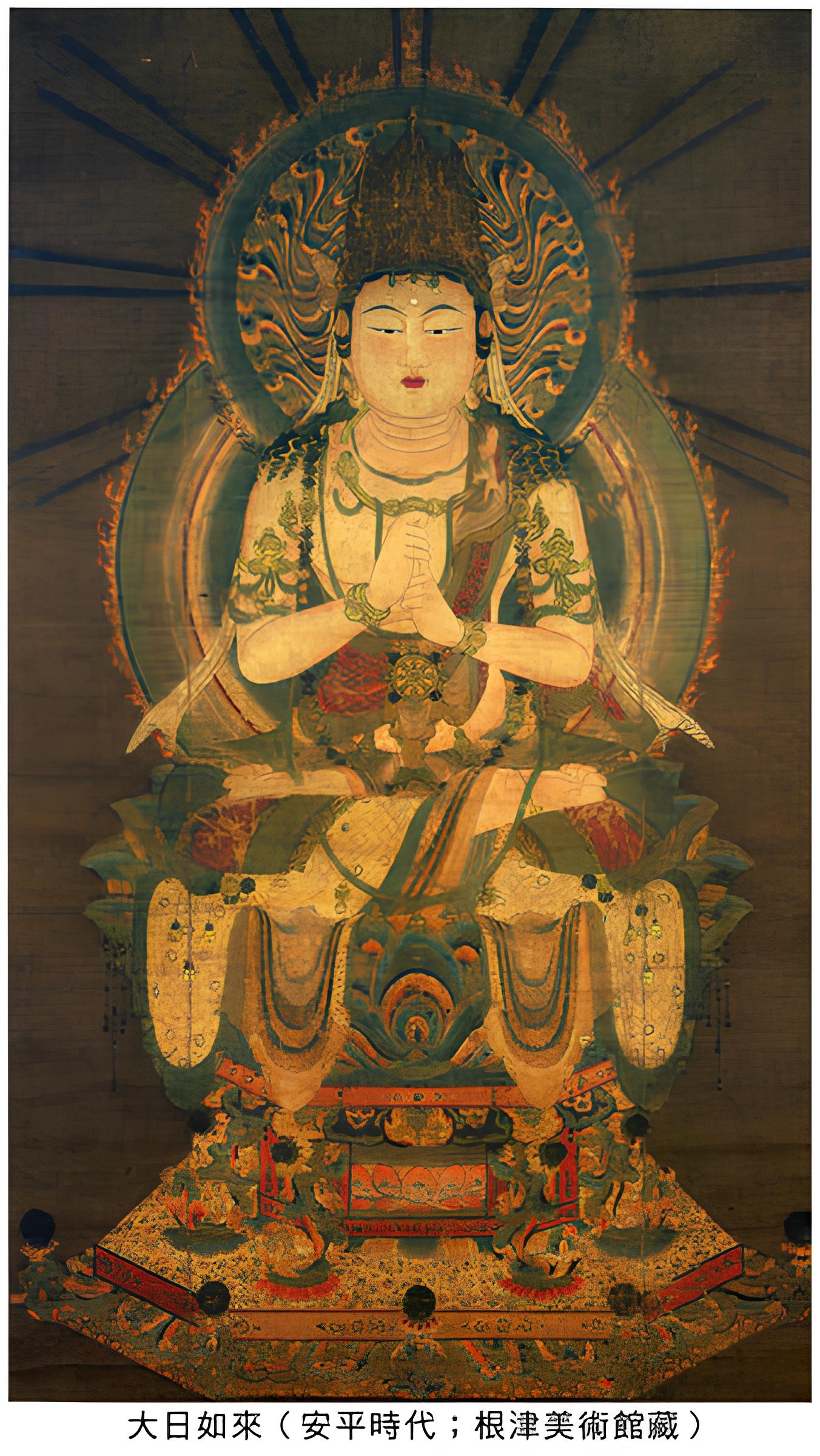
Mahāvairocana, also known as Vairocana (大日如來 Dainichi Nyorai)
He is considered to be the cosmic Buddha in Mahāyāna Buddhism, particularly in the esoteric traditions of Shingon and Tendai of Japan. His name literally translates as “Great Sun”, indicating his all-illuminating radiance of wisdom that dispels the darkness of ignorance. In artistic representation, he is often depicted to be a seated regal figure who wears a tall bejeweled crown, and his hands show the gesture known as Wisdom Fist, which symbolizes the unity between the Five Great Elements (earth, fire, water, air, space) and spiritual consciousness.
大日如來,又稱毘盧遮那佛,漢譯為「大日如來」,為大乘佛教中象徵宇宙法身的根本佛,尤為日本真言宗與天台宗密教所尊奉。其名意為「大日」,象徵遍照一切、破除無明的究竟智慧之光。在其形象中,大日如來多以端坐莊嚴之菩薩相示現,頭戴寶冠,雙手結「智拳印」(梵語:Jñāna-mudrā),象徵五大(地、水、火、風、空)與覺性智慧之不二合一。
Vajradhātu and Garbhadhātu Maṇḍalas

Vajradhātu and Garbhadhātu Maṇḍalas

金剛界與胎藏界曼荼羅
The word Maṇḍala (曼荼羅) in Sanskrit often refers to a certain geometric configuration of profound spiritual symbols. In the esoteric Buddhist traditions of East Asia, particularly in Japan, two of the most important Maṇḍalas are the Vajradhātu (金剛界) and Garbhadhātu (胎藏界)Maṇḍalas, serving as the blueprints of cosmic reality.

The Garbhadhātu Maṇḍala, known as 胎藏界 Tāizāngjiè in Chinese and Taizōkai in Japanese, essentially means “Maṇḍala of the Womb Realm” derives from Mahāvairocana Sūtra《大日經》 . It symbolizes the universal principle, compassion, and the inherent potential for Buddhahood within all sentient beings.

The Vajradhātu Maṇḍala, known as 金剛界 Jīngāngjiè in Chinese and Kongōkai in Japanese, can be translated as “Maṇḍala of the Adamantine Realm” derives from Vajraśekhara Sūtra《金剛頂經》 . It symbolizes wisdom, the indestructible nature of enlightenment, and the active realization of that potential.
Maṇḍala 為梵語,漢譯作「曼荼羅」,曼荼羅作為佛教宇宙觀的核心象徵,不僅是圖像藝術,更是修行的精神地圖。它展現整體秩序、萬法交融與心性本淨的哲理:宇宙和人心彼此呼應,修行者在觀想與儀軌中,經驗淨化、圓滿與自在。在真言密教中,最為重要者即為金剛界與胎藏界兩部曼荼羅,象徵宇宙實相之全體結構。

胎藏界曼荼羅
胎藏界曼荼羅,依《大日經》而作,表毘盧遮那如來的「理德」。象徵宇宙之本源理體與大悲德性,顯示一切眾生本具成佛之可能。

金剛界曼荼羅
金剛界曼荼羅,依《金剛頂經》而作,表毘盧遮那如來的「智德」。象徵堅固不壞之智慧,表現覺悟之力與成佛潛能的實踐與顯現。
Mahāmāyūrī Vidyārājñī

Mahāmāyūrī Vidyārājñī

佛母大孔雀明王
Mahāmāyūrī Vidyārājñī, literally translates as “Great Peacock Wisdom King”(孔雀明王). In the Sūtra associated with her, it is recorded that when a monk known as Svāti was bitten by a venomous snake, Ānanda, one of Śākyamuni Buddha’s chief disciples, asked the Buddha for the means to heal Svāti. The Buddha then expounded the Sūtra of Mahāmāyūrī Vidyārājñī《佛母大孔雀明王經》, and through her power, Svāti was saved. She is often depicted as a peacock-riding goddess and is believed to be able to dispel calamities and diseases. Spiritually, this also signifies her ability to transform the three poisons, namely greed, ignorance, and anger, into enlightening wisdom.
佛母大孔雀明王,梵稱 Mahāmāyūrī Vidyārājñī,依其相關經典《佛母大孔雀明王經》(出自大正新修大藏经)記載,比丘斯瓦提(Svāti)遭毒蛇所噬,阿難尊者向釋迦牟尼佛請示救治之法,佛陀遂宣說該經,憑藉孔雀明王之威德神力,使斯瓦提得以痊癒。 其形象多示現為乘孔雀之尊,具除毒、息災、療病之力;在法義上,亦象徵能轉貪、瞋、癡三毒為覺悟智慧。
Mahākāla

Mahākāla

大黑天
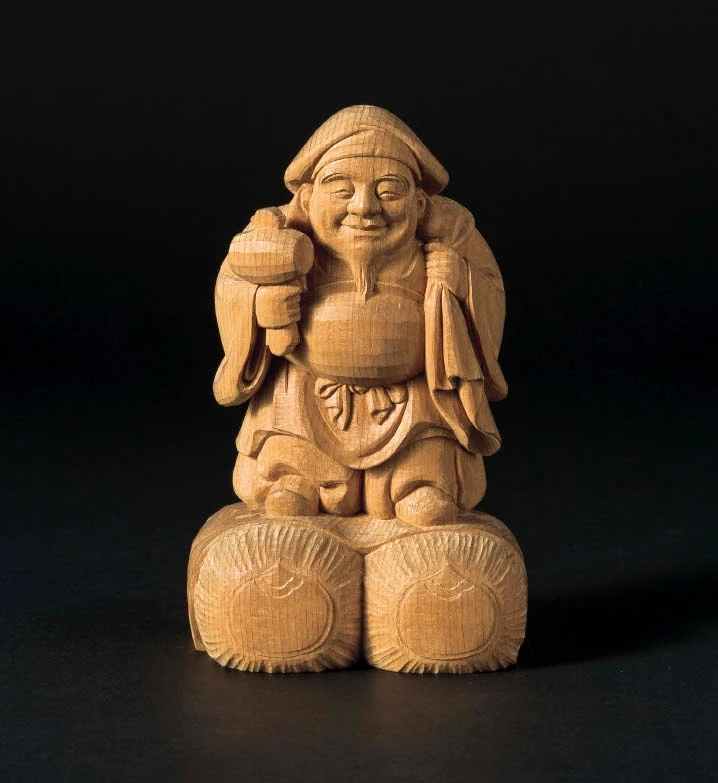
One of the meanings of Mahākāla’s name in Sanskrit translates as “Great Black Deity”. He is known as Dàhēitiān 大黑天 in Chinese and Daikoku-ten in Japanese. An important Dharmapala (護法) in Buddhism, he was originally considered to be a wrathful form of the Hindu deity Śiva, he was later absorbed into Buddhism. In Japan, having been identified as the Shintō deity Ōkuninushi-no-Mikoto, Mahākāla’s iconography evolved from being a wrathful god to become a gentle, jolly-looking old man, who holds a huge treasure sack in one hand and a miraculous mallet that can produce all desirable things in the other, and he stands on two rice bags that symbolize abundance. He is one of the Shichifukujin 七福神, or Seven Gods of Good Fortune, and is extremely popular and well-beloved in Japan as the bringer of luck and prosperity.
「摩訶迦羅」一名可譯為「大黑天」,漢稱「大黑天」,日稱「Daikoku-ten」。 其原型為印度教濕婆神(大自在天)之忿怒相,後被佛教所吸收並轉化成重要護法之一。在日本文化當中,又與神道之大國主命相融合,其形象逐漸由威猛忿怒轉為慈和喜悅之老翁相。 其常持寶袋與打出萬寶之小槌,足踏米俵,象徵豐饒、福德與財富。作為「七福神」之一,大黑天在日本佛教及民間皆深受敬仰,為招福納財之象徵。